
This boy who cried wolf bedtime story follows Eli, a young shepherd who discovers what happens when people stop believing him. It is a gentle bedtime story for kids ages 6-8 about honesty, trust, and why the truth matters most when it counts.
Kids who have ever stretched the truth for attention, or felt frustrated when no one believed them, will find plenty to think about in Eli’s story. It is a classic fable with real stakes, told gently for bedtime.
Read it together tonight, and talk about why the people we tell the truth to are the same people who show up when we need them.
In this story
Why Kids (and Parents) Love This Boy Who Cried Wolf Bedtime Story
- A classic fable with real, relatable stakes about honesty.
- It opens up easy conversations about why trust matters.
- A clear cause and effect kids ages 6-8 can follow and discuss.
- No graphic outcomes, the lesson lands without anything frightening.
- A satisfying, hopeful ending that still takes the lesson seriously.
Story Info Box
Reading Time: About 6 minutes
Age Range: Ages 6-8
Moral: Telling the truth keeps people ready to help you when it really matters.
Meet the Characters
Eli the Shepherd
Eli watches his village’s sheep alone on the hillside every day. He gets lonely and bored, and sometimes says things that are not quite true just to feel less alone.
The Villagers
The villagers work hard in the fields below the hill. They trust Eli to tell them the truth, and they always come running when he calls for help.
The Story
Eli watched the village sheep every day on the hill above the valley, and most days, nothing exciting happened at all.
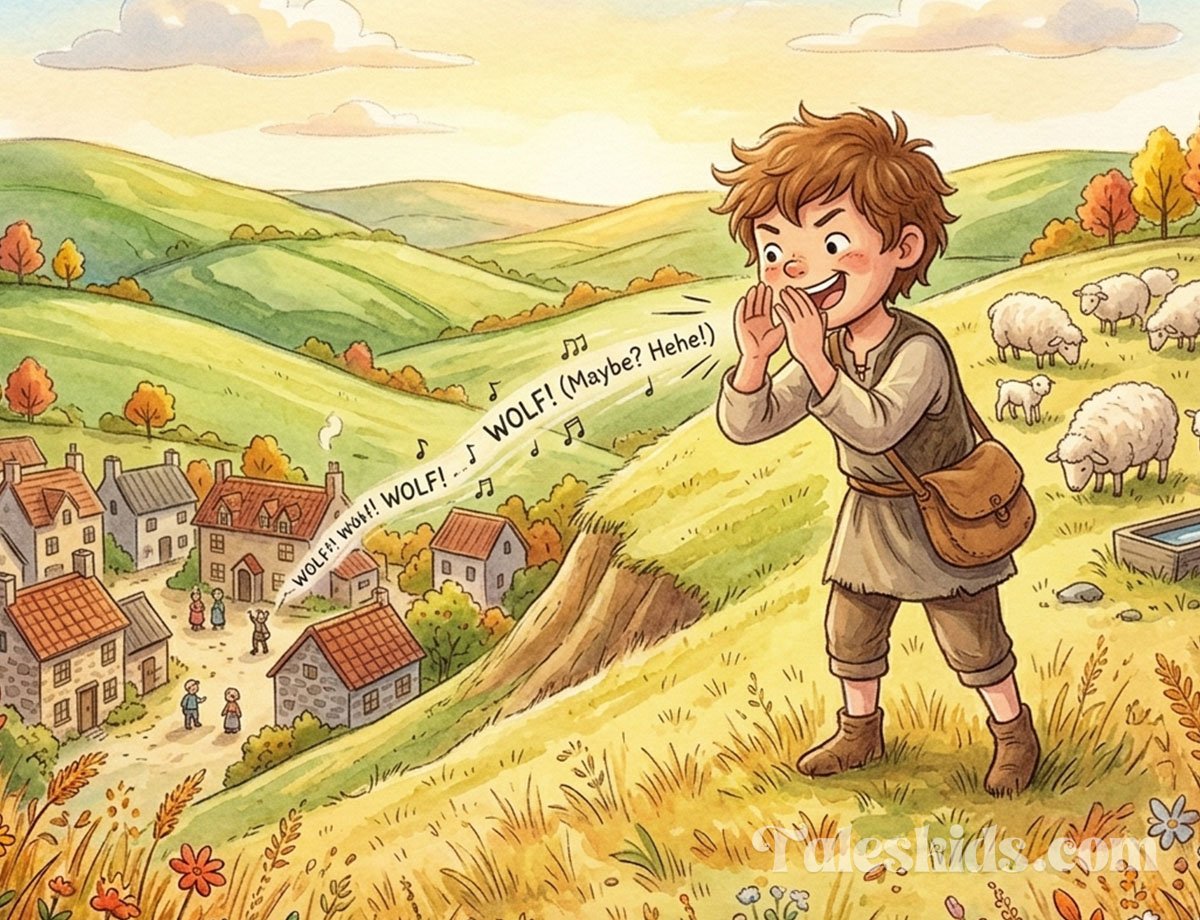
One slow afternoon, bored and a little lonely, Eli had an idea.
“Wolf! Wolf!” he shouted down toward the village. “A wolf is after the sheep!”
Villagers dropped their tools and rushed up the hill, hearts pounding, ready to help.
When they arrived, panting, they found Eli laughing and the sheep grazing peacefully. “There’s no wolf,” he giggled. “I just wanted some company.”
The villagers were not amused, but they shook it off and went back to work.
A few days later, lonely again, Eli tried it once more. “Wolf! Wolf! Help!”
Again the villagers ran up the hill. Again they found nothing but Eli’s grin and a flock of calm, unbothered sheep.
This time, no one laughed along with him.
“You cannot keep calling us up here for nothing,” one farmer said, wiping his forehead. “Next time, we might not believe you.”
Eli shrugged, not really understanding what he had broken.
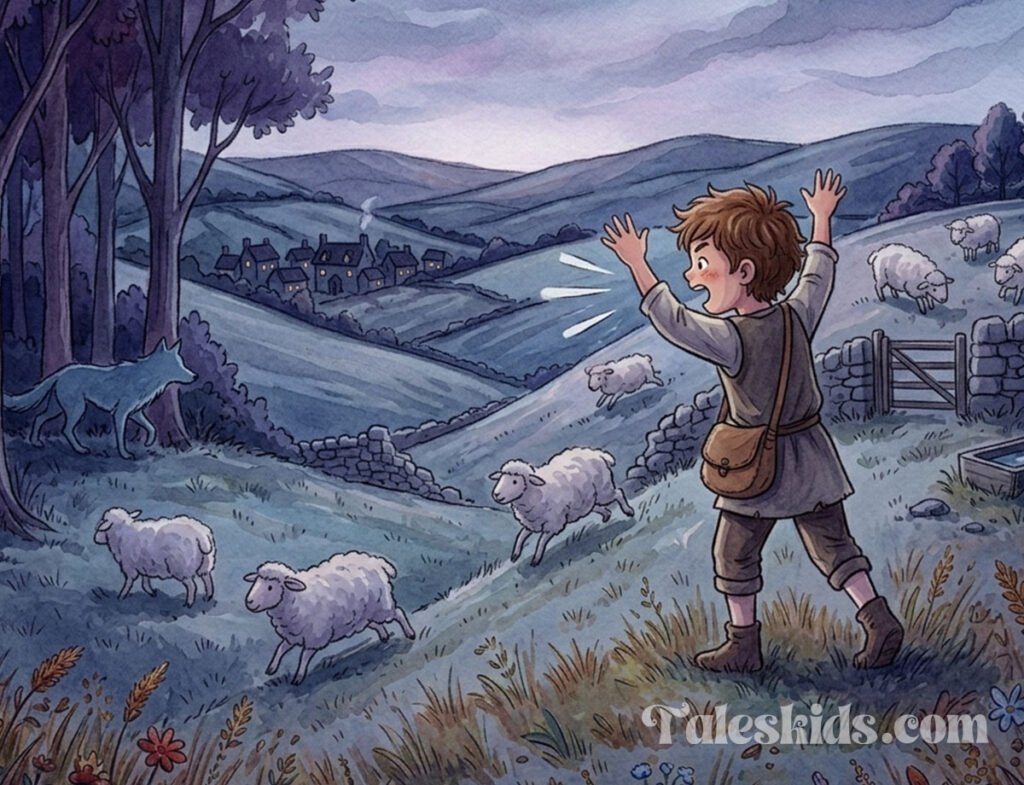
Then, on a gray, quiet evening, Eli saw something move at the edge of the trees. A real wolf, gray and silent, slipping toward the flock.
“Wolf!” Eli screamed, his voice cracking with real fear this time. “Wolf! Please, somebody, help!”
Down in the village, the farmers heard him shouting and glanced at each other.
“Not again,” one of them sighed, and went back to their work.
No one came running this time.
Eli waved his arms and shouted at the wolf himself, and the startled sheep scattered in every direction, bleating wildly into the hills and trees.
By the time the wolf finally slunk away, frightened off by all the noise, the flock was gone, scattered across the dark hillside.
Eli spent the rest of that night searching alone, calling each sheep by name, coaxing them one by one out of the bushes and back toward home.
The next morning, exhausted, he told the villagers exactly what had happened, the real wolf, the scattered sheep, the long night alone.
This time, they believed him completely, because they could see how tired and shaken he truly was.
“I am sorry,” Eli said quietly. “I will not call wolf unless I mean it. Not ever again.”
Moral of the Story
This boy who cried wolf bedtime story is not really about a wolf at all. It is about what happens to trust when it gets spent on jokes instead of saved for the moments that matter. For kids learning about honesty, Eli’s long night alone shows exactly why the truth is worth protecting.
Reading Tips for Parents
Voices and Pacing
Make Eli’s first two cries playful and a little mischievous, then let his voice crack with real fear on the third one. Slow down for the night search scene to let it land.
Questions to Ask Afterward
Why didn’t the villagers come the third time? Has anyone ever stopped believing you after a joke went too far? What do you think Eli learned that night?
For more on helping kids understand honesty and trust, the Greater Good Science Center has thoughtful resources for parents.
Ways to Extend the Story
Discussion Questions
Why did Eli call wolf when there wasn’t one? What would you have done differently if you were Eli?
A Simple Related Craft
Make cotton ball sheep. Glue cotton balls onto a paper sheep shape, then count how many “sheep” your child can round up and glue back into one flock.
An Alternate Ending Kids Can Imagine
What if the villagers had come running the third time after all? Ask your child to imagine how the ending might have changed.
A Bedtime Routine Tie-In
Tonight, talk about one small true thing that happened during your child’s day, a simple practice in noticing the value of an honest story.
More Bedtime Stories You’ll Love
Frequently Asked Questions
What age group is this boy who cried wolf bedtime story for?
It is written for kids ages 6-8, who can follow the cause-and-effect lesson about honesty and trust.
Is this based on the classic fable?
Yes. It is inspired by the classic Aesop fable, written as an original retelling with new characters, dialogue, and a gentler outcome for the sheep.
What is the moral of the story?
Telling the truth keeps people ready to help you when it really matters most.
Does anything bad happen to the sheep?
No. The sheep simply scatter and need to be found, there is no harm to any animal in this version of the story.
How long does it take to read aloud?
About 6 minutes, making it a good fit for a slightly longer bedtime routine.
Eli’s long night searching for his scattered flock reminds us that the truth is worth telling, especially on the day we need someone to believe us most.
